
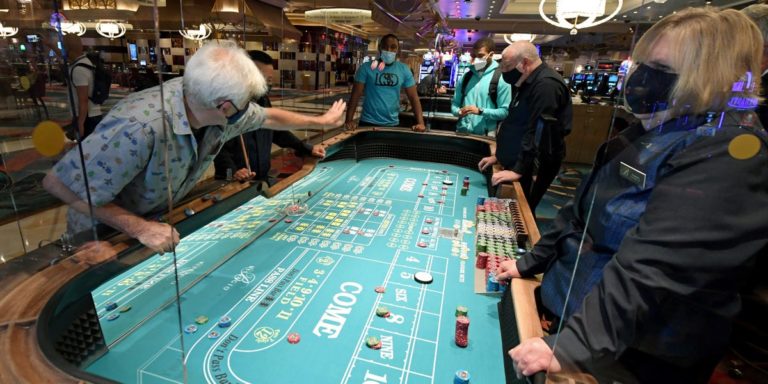
Live roulette often appears unpredictable, but after reviewing hundreds of rounds, we have identified practical patterns that enhance decision-making without guaranteeing impossible guarantees. At Slotsvader Casino ενημέρωση εφαρμογής, the live roulette lobby offers European, French and speed-based tables, each with subtle rule changes that impact how often you can expect to bank a win. Our approach is analytical rather than emotional: we examine the wheel layout, the table limits, the dealer rhythm and the mathematical structure of each bet type before placing chips. This guide explains how to play live roulette with a sharper focus, control your bankroll more effectively and steer clear of the common mistakes that drain balances. We do not suggest that any system can overcome the house edge, but we do feel that better preparation, table selection and discipline can raise your frequency of successful spins and make each session more endurable. By the end, you will have a more defined framework for selecting outside bets, evaluating tables and remaining in control.
Grasp the Live Roulette House Edge and Versions
European roulette is the standard reference point because its single zero produces a house edge of 2.70 percent. French roulette often employs the same wheel but applies the La Partage or En Prison rule on even-money bets, which decreases the effective edge to around 1.35 percent when those rules apply. American roulette, by contrast, has both a single zero and a double zero, raising the house edge to 5.26 percent. In live lobbies, we observe players move toward American tables because of speed or visual design, but this choice directly lowers the frequency of winning over time. If your goal is to win more often, picking a European or French table is one of the simplest analytical steps available. At Slotsvader Casino, the live lobby usually marks these variants clearly, so we advise spending a few seconds reading the table name and rule description before joining. A lower house edge does not promise a winning session, but it modifies the long-term return profile and maintains more of your bankroll in play across a larger number of spins.
Avoid Common Mistakes That Lower Winning Frequency
One of the most common mistakes we see is chasing losses with larger outside bets after a few unlucky spins. The live dealer carries on dealing, and the pressure to recover can turn a 5-unit loss into a 15-unit loss in seconds. Another frequent error is placing too much value on single-number bets because the payout looks attractive. A straight-up win seems strong, but the long gaps between wins can drain a bankroll before you get to a profitable stretch. We also spot players ignoring the table variant and limits because they want to join the first available seat. That habit often places them on an American double-zero wheel or a table where the minimum bet is too high for their session plan. By treating each table as a separate decision, you can prevent these structural disadvantages before the first spin. Analytical players tend to review their last few sessions and write down which mistakes repeated most often.
We advise building a short pre-bet checklist that requires less than a minute. First, confirm whether the table uses a single-zero wheel and whether La Partage or En Prison applies. Second, check that your current session bankroll can support at least 30 units without forcing a change in strategy after two or three losses. Third, determine which outside bet you will use and hold the stake consistent. Fourth, note the table tempo and whether the dealer gives you enough time to think. This checklist may appear simple, but it stops the emotional drift that often emerges after a streak. Once the checklist is complete, you can concentrate on the game instead of constantly questioning your plan. We have found that players who use a consistent routine are less likely to place random bets or move from outside wagers to high-risk straight numbers out of boredom. Over time, this consistency enhances the frequency of winning sessions because you remain on a mathematically sound path rather than allowing the live environment to dictate your decisions.
Employ Betting Progressions Only as a Short-Term Framework
Progression systems such as the Martingale, Fibonacci or D’Alembert are widespread in live roulette, but we see them as risk management tools as opposed to ways to beat the wheel. The Martingale, for instance, doubles your stake after a loss so that a single win regains previous losses and gains one unit. This works in theory, but in practice table limits and a string of losses can rapidly make the required stake very large. We have observed players reach the table maximum after only seven or eight consecutive losses on even-money bets, which is not as rare as many assume. A more balanced approach is to implement a flat betting structure or a very mild progression that rises by one unit after a loss and reverts after a win. The key is to understand that no progression alters the probability of the next spin. Each spin is independent, and the wheel has no memory of previous outcomes.
If you opt to use a progression, we advise setting a clear limit on how many steps you will track before returning to your base unit. For example, you might permit the stake to rise for three losses and then reset regardless of the outcome. This prevents the progression from spiralling into larger recovery bets that no longer fit your bankroll. It is also useful to test any progression in a free or low-stakes live table before applying it with meaningful money. At Slotsvader Casino, different live roulette tables have different minimum and maximum limits, so select one that gives your progression enough room without encouraging extreme risk. We favor strategies that highlight consistency over dramatic recovery, because the goal of winning more often is better served by preserving your ability to continue playing than by chasing a single large correction. A short-term progression can be part of a structured session, but it should never transform into the main reason for placing a bet.
Focus on Outside Bets for Regular Payouts
If winning more often is the priority, outside bets are the most effective tool in live roulette. Black or red, even or odd and low or high bets each cover 18 of the 37 numbers on a European wheel, providing close to a 48.65 percent chance of success on every spin. That is not a guarantee of profit, because even-money bets pay 1 to 1, but it does mean you are considerably more likely to see regular wins than with straight-up numbers. Straight bets on a single number cover only one pocket and carry a 2.70 percent chance on a European wheel, so although the payout is high, the frequency of winning is quite low. For players who want to prolong a session and build confidence, outside bets provide a smoother rhythm. We still recommend using them with careful bankroll management, but the lower variance of outside bets makes them more straightforward to analyse and control than long-shot bets. A balanced outside-bet plan also makes it easier to apply the table-rule advantages found in French roulette, especially on even-money outcomes.
Handle Your Bankroll With a Defined Session Plan
Fund management is not just about setting a loss limit; it is about deciding how many betting units you have before the first spin. We suggest dividing your session budget into at least 30 to 50 units, where one unit is your standard outside bet. For example, if you have 300 euros, a 5-euro outside bet gives you 60 units, while a 10-euro bet gives you only 30. The number of units matters because live roulette produces streaks in both directions, and you need enough room to survive normal variance without making desperate decisions. Before entering a table at Slotsvader Casino, we set three figures: a session bankroll, a target profit at which we pause, and a stop-loss that ends the session. These numbers should be based on what you can afford to lose, not on the amount you hope to win. This simple structure transforms a random series of spins into a controlled sequence where each bet has a clear purpose.
Once the session starts, we avoid raising stakes after a loss purely to recover. That mindset often turns a small negative result into a large one because live roulette does not owe you a win after several losses. Instead, we use the unit size consistently and only consider a modest increase after a clearly defined winning period. For example, if a session bankroll grows by 20 percent, we might take that profit out of play and continue with the original unit size. This approach safeguards the gains and reduces the emotional urge to bet bigger because the table feels hot. We also advise taking short breaks after long streaks, whether positive or negative. A brief pause helps you review whether your bets still fit the original plan. In live roulette, the action is continuous, so the most analytical players are not those who bet every round but those who know when to observe and reset.
Read the Croupier, Wheel Rhythm, and Game Rhythm Analytically
Live roulette introduces human and mechanical elements that are not found in random number generator games. The dealer’s release point, the wheel speed and the ball’s movement can create patterns, but these patterns are not reliable enough to forecast the next number with certainty. We observe these elements mainly to pick a calm table and to schedule our bets comfortably. Some players believe that a consistent dealer generates repeatable sectors, and while short-term trends may show up, the physical variables are too complicated to transform into a dependable edge. From an analytical standpoint, the most important information is not the previous numbers but the pace of play. A table that stops bets too quickly prompts rushed decisions, while a slower table gives you time to confirm your stake and evaluate your exposure. At Slotsvader Casino, the live lobby offers different dealers and table speeds, so you can select an environment that supports clear thinking.
We also follow wheel history only as a broad observation tool, not as a prediction system. Previous numbers can indicate whether a table has been in a run of red or black results, but this information does not alter the odds of the next spin. Casinos display recent results because players prefer to see them, not because the wheel is forced to correct itself. We employ the history board to see how long a session has been running and to detect extreme streaks that might influence our emotional state. If we see a long series of one colour, we do not assume the opposite is due; we either adhere to our flat outside-bet plan or hold off for the streak to end. The same applies for dealer signature attempts. Even if a dealer looks to hit a broad sector several times, the sample is usually far too small to support a reliable betting edge. Our practical conclusion is to opt for slower tables, interpret the tempo, and regard wheel history as context rather than instruction.
Choose Tables Offering Player-Friendly Rules
Aside from the variant, specific table rules can change the odds in your favour. The La Partage rule, for example, gives back half of your even-money stake when the ball lands on zero, while En Prison can hold your bet for another spin. Both rules lower the cost of zero outcomes on red/black, odd/even and high/low bets. We also look for tables with reasonable minimum and maximum limits, because a table that pushes you to bet too high relative to your bankroll creates unnecessary pressure. Live roulette tables at Slotsvader Casino often show the rule set in the lobby or within the game interface, and we recommend checking these details before entering. A player-friendly table may offer slower rotation speeds, a visible wheel history and a dealer who pauses for all bets to be placed. These factors do not change the underlying probability of the next spin, but they build a calmer environment where you can apply your plan without rushing. The following rules are the ones we prioritise when selecting a live roulette table:
- Single-zero or French wheel with a single zero rather than an American double-zero layout.
- La Partage or En Prison active on even-money bets to cut zero losses.
- Table limits that permit at least 20 to 30 minimum units within your session bankroll.
- A clear interface with visible recent results and enough time to put bets calmly.
- Consistent dealer behaviour and steady wheel speed without excessive distractions.
We have discovered that players who consciously choose tables based on these features tend to make fewer impulsive bets. When a table is clearly structured and the rules are transparent, you can focus on the mathematical side of your bet selection instead of responding to the pressure of a fast-moving dealer. This is especially important in live roulette, where the social atmosphere can promote riskier behaviour. At Slotsvader Casino, the variety of live dealers means you can observe a table before joining, which is a useful habit. Watch how the dealer handles the wheel, how quickly each round closes and whether the interface shows clear payout information. If a table feels rushed or the limits drive you beyond your comfort zone, move to another table. The ability to contrast options is one of the strongest advantages of a well-organised live casino lobby, and it requires nothing to use.